
The Cost of Waiting Another Season
A garage door that's been quietly corroding, swelling, or loosening all summer doesn't usually fail on a mild afternoon. It fails on the coldest morning of the year, right when you're trying to leave for work and the opener grinds, stalls, or the door won't budge at all. Left unchecked, a worn spring under added cold-weather tension can snap without warning, and a door that's been sagging on its track can jump the rail entirely. What would have been a $150-$250 adjustment in October becomes an emergency call, a damaged panel, or a full spring replacement once winter actually arrives. The window to catch these problems cheaply is right now, before temperatures start swinging and the hardware gets its first real workout of the season.
What This Past Summer Already Did to Your Door
Months of heat and humidity leave marks that aren't always obvious until cold weather exposes them. Wood and composite panels absorb moisture during humid stretches and swell slightly, which can throw off alignment at the seams or make the door bind in its tracks. Metal hardware, especially hinges, rollers, and spring coils, is prone to surface rust after a summer of high humidity and afternoon downpours, particularly if the garage doesn't have great airflow. That rust doesn't go away on its own; it accelerates wear every time the door cycles. This is also a good time to check for any lingering storm damage from hurricane-season weather, since high winds can rack a door frame or bend a track just enough that it still functions but is working harder than it should.
Springs and Hardware Don't Like Temperature Swings
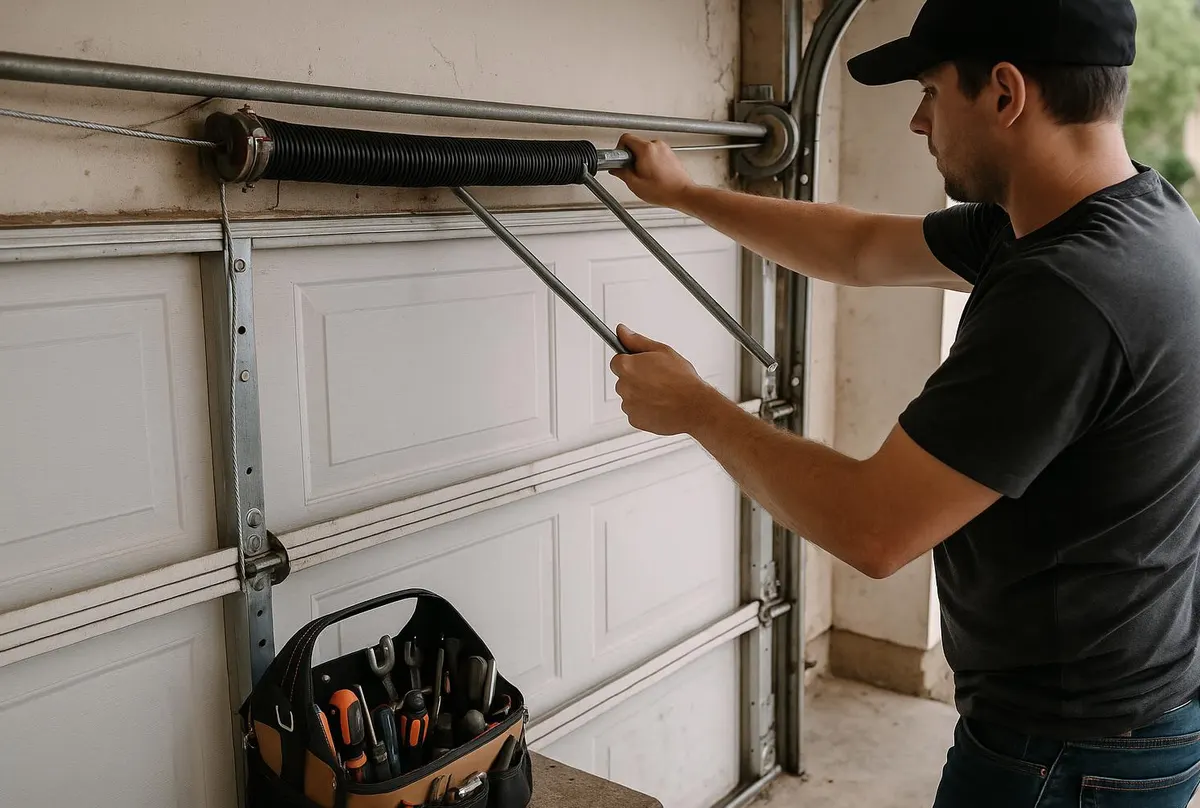
Steel contracts in cold weather, and a torsion or extension spring that's already fatigued from months of heat cycling and humidity will feel that contraction as added stress. This is why spring failures tend to cluster around the first real cold snaps of the year rather than during summer. Signs a spring is on its way out include a door that feels heavier than usual when operated manually, visible gaps in the coil, or a loud bang from the garage (that's often a spring breaking, not the door itself). Rollers and hinges should move smoothly with no grinding or catching; if they don't, a light coating of garage-door-specific lubricant on the hinges, rollers, and spring coils goes a long way toward preventing the kind of friction that shortens hardware life once the temperature drops.
Sealing Out Wind, Rain, and Cold Air
If your garage door has been letting in water during afternoon downpours or whistling during storm-season winds, the bottom seal and weatherstripping are probably compromised. Rubber seals harden and crack under repeated sun and heat exposure, and once that happens they stop doing their job: keeping wind-driven rain out and conditioned air in. For homes with an attached garage, a bad seal also means cold air finds its way into the house through the garage wall, which shows up as a higher heating bill. Replacing bottom seals and side weatherstripping is inexpensive and straightforward, and it's worth doing before winter rather than after you've already dealt with a wet garage floor or a drafty laundry room on the other side of the wall.
Check the Opener and Backup Power
Winter storms in this part of Alabama can still knock out power, even without the dramatic wind loads of hurricane season. If your opener doesn't have a battery backup, or the one it has hasn't been tested in a while, now is the time to check it. A dead backup battery means a manually operated door during exactly the kind of weather when you'd rather not be outside fumbling with it. It's also worth testing the auto-reverse safety sensors, since humidity and moisture buildup over the summer can sometimes affect sensor alignment or the photo-eye lenses, causing false reversals or, worse, a failure to reverse when something's in the way.
A Quick Pre-Winter Checklist
- Inspect springs for rust, gaps in the coil, or visible stretching
- Lubricate hinges, rollers, and spring coils with a silicone or lithium-based garage door lubricant
- Replace bottom seal and side weatherstripping if cracked, flattened, or letting in light
- Check panels and frame for swelling, warping, or storm damage from the past season
- Test the opener's battery backup and auto-reverse safety sensors
- Tighten loose hardware, including track brackets and hinge bolts
- Clear tracks of debris and check for alignment issues
When to Call Vestavia Hills Garage Door
If you spot rust on the springs, a door that's noticeably heavier to lift, gaps around the weatherstripping, or an opener battery that won't hold a charge, it's worth having it looked at before winter rather than after something fails. Our preventive maintenance visits cover exactly this kind of pre-season check: spring tension, hardware wear, seal condition, and opener function, all addressed before the cold makes small problems bigger. If a spring is already showing signs of fatigue, our spring replacement service gets it swapped out safely and correctly, which isn't a job to tackle on a ladder in December. Catching these issues now means fewer surprises and fewer emergency calls once the weather turns.
If your garage door needs a pre-winter look, call Vestavia Hills Garage Door today and we'll get it sorted before the cold weather does.