
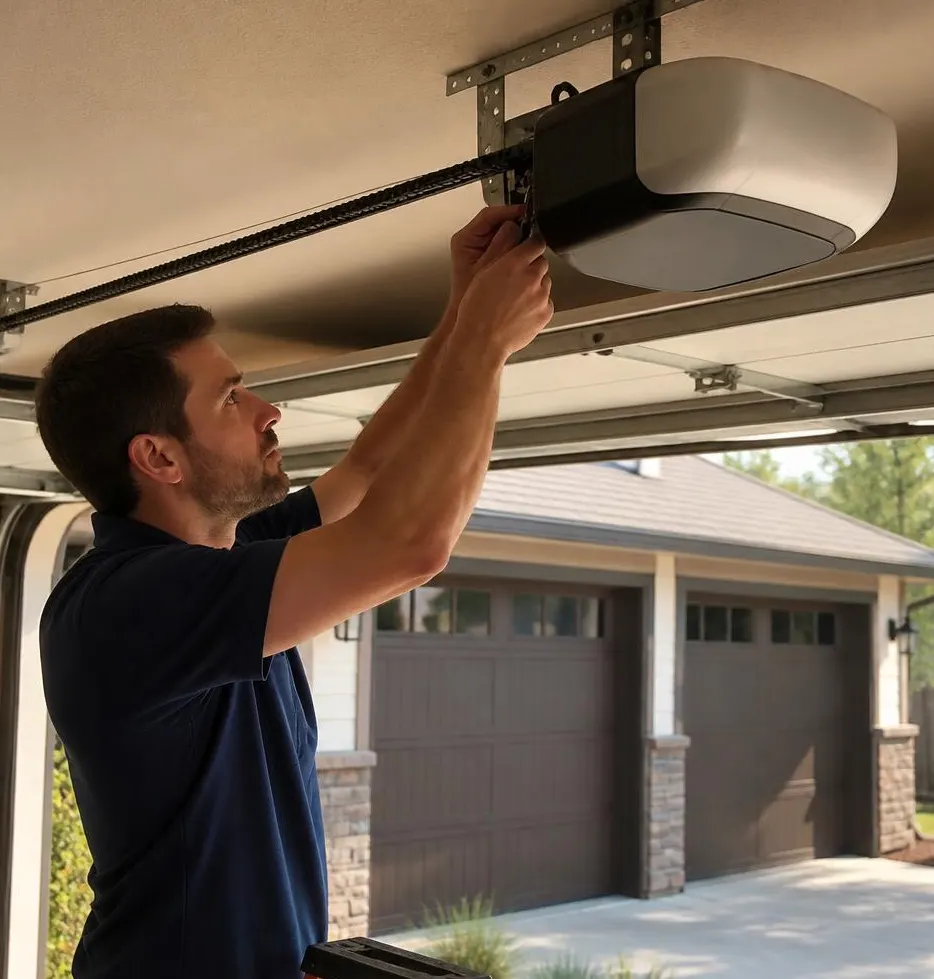
The Mistake Most Homeowners Make First
The second a garage door starts banging, grinding, or squealing, most people reach for a can of WD-40 and spray every moving part they can see. It's tempting because it's cheap, it's already in the garage, and the noise often quiets down for a week or two. The problem is WD-40 is a solvent, not a lubricant. It strips old grease away, attracts dust and pollen (which Vestavia Hills has plenty of in spring and fall), and leaves hinges and rollers drier than before once it evaporates. That quick fix often makes the real problem worse a month later.
Here's a better way to work through it, starting with the cheapest fixes and ending with the point where it's worth bringing in a technician.
Tools You'll Need
- Socket wrench set or adjustable wrench
- Silicone-based garage door lubricant (not WD-40 or motor oil)
- Flashlight
- Level
- Step ladder
- Work gloves and safety glasses
Step-by-Step: Diagnosing the Noise
- Watch a full cycle first. Open and close the door while standing clear of the track. Note whether the noise happens at the top, middle, or bottom of travel, and whether it's a squeal, a rattle, a grinding sound, or a loud bang. This tells you where to focus instead of guessing.
- Tighten everything. Vibration from daily use, plus Alabama's humidity swings that make wood door panels and jambs expand and contract, works bolts loose over time. Go along the track brackets, hinges, and the opener's mounting bracket with a socket wrench and snug up anything that moves.
- Lubricate the moving metal parts. Apply silicone-based lubricant to the rollers, hinges, the opener's chain or screw drive, and the springs. Skip the plastic idler bearings and nylon rollers; lubricant can make them slip. Wipe off excess so it doesn't collect grit.
- Check the rollers themselves. If they're metal with worn-out bearings, they'll grind no matter how much you lubricate them. Nylon rollers run quieter and hold up well against the humidity-driven rust that plagues steel rollers in this climate. Swapping them is a reasonable DIY job if you're comfortable removing roller brackets one at a time while the door stays supported.
- Inspect for rust and corrosion. Afternoon downpours and summer humidity push moisture into garages more than most people expect, especially if the weatherstripping is worn. Surface rust on hinges or track can be cleaned with a wire brush and treated with lubricant; heavier corrosion on springs or cables is a sign to stop and call a technician.
- Check the level of the track. Use a level against the vertical track. If it's leaning or the door rubs one side, loose track that's drifted out of alignment is likely adding noise. Minor adjustments with a wrench are fine; if the track is bent, that's a repair job, not an adjustment.
Where DIY Should Stop
Anything involving the torsion spring, cables, or the opener's internal gears should go to a trained technician. Torsion springs are under heavy tension and have caused serious injuries when handled without the right tools. If tightening, lubricating, and roller swaps don't quiet things down, the noise is usually coming from a worn drive mechanism inside the opener itself, not from anything you can see or reach safely.
When a Belt-Drive Swap Makes Sense
If your opener uses a chain drive and it's more than eight to ten years old, chronic noise is often the motor and chain simply wearing out together. Rather than replacing a chain repeatedly, swapping to a belt-drive opener is a permanent fix for noise; belt drives run quieter because there's no metal-on-metal contact pulling the trolley. It's a bigger job involving rewiring the opener unit and reprogramming safety sensors, so it's worth weighing against a full opener replacement rather than a chain swap alone.
When to Call Vestavia Hills Garage Door
If you've tightened hardware, lubricated the right parts, and the door still grinds, bangs, or shakes the wall when it runs, it's time to bring in a technician. Our Opener Repair & Installation service covers everything from diagnosing a failing motor to installing a quiet belt-drive system sized correctly for your door. If the noise turns out to be a worn or rusted spring, our Spring Replacement service handles that safely with the right tools and tension equipment, something that shouldn't be attempted at home.
If your garage door opener in Vestavia Hills, AL is driving you up the wall every time it runs, give Vestavia Hills Garage Door a call. We'll find the real source of the noise and fix it right the first time.